
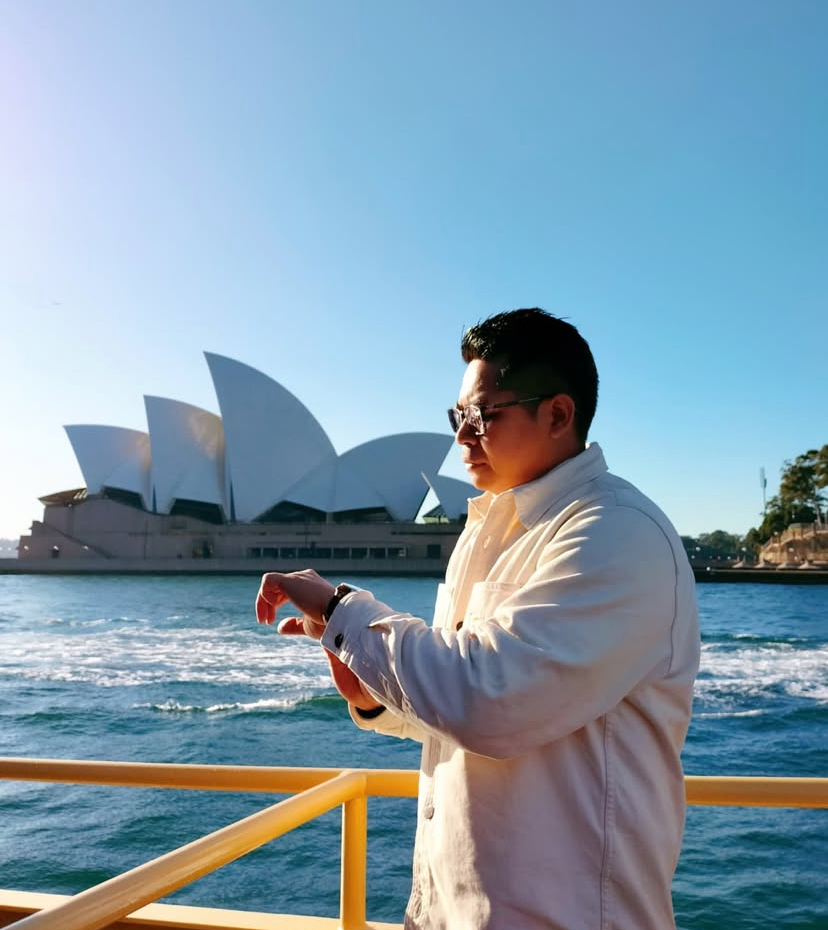
Rangga Saptya Mohamad Permana, an assistant professor and researcher from the Study Program of Television and Film at Universitas Padjadjaran (Unpad), has recently completed his doctoral studies as a PhD candidate at Film and Screen Studies, Monash University, Australia. His groundbreaking dissertation, titled “Indonesian Culture of Critique: A Study of Kabayan Films in Indonesia,” delves into the unique ways social and political critique are expressed through the iconic Sundanese folk character, Kabayan.
Permana’s research investigates the Kabayan film series as a vehicle for social commentary across two distinct political periods in Indonesia: the authoritarian New Order and the subsequent Reform era. The study focuses on Kabayan, a trickster figure rooted in Sundanese culture who is often depicted as a humorous and seemingly naïve figure but uses satire to convey critique indirectly. A central argument of the thesis is that critique in Indonesia often manifests as
kritik beradab, a form of “civilized critique” marked by politeness, non-confrontation, and the careful maintenance of social harmony. The research found that during the highly censored New Order era, Kabayan films skillfully embedded critiques of socioeconomic inequality, corruption, and rural marginalization through humor and symbolic representation. In the more open Reform era, however, the character became more idealized and less subversive.
The study strongly aligns with the United Nations’ Sustainable Development Goal 16 (SDG 16): Peace, Justice, and Strong Institutions, as it illustrates how local cultural frameworks can foster inclusive dialogue and accountability. By analyzing Kabayan films as a form of
kritik beradab, the dissertation reveals a unique Indonesian method for demanding justice and holding institutions accountable, even within the constraints of an authoritarian regime. This provides a vital, culturally-grounded perspective, showing that the path to building strong, inclusive societies is not universal but must respect diverse local values and forms of expression.By examining the Kabayan films, Rangga Saptya Mohamad Permana’s research not only broadens the academic understanding of critique in Indonesia but also highlights how vernacular media can shape political communication. His work may also inspire Indonesian filmmakers to create critical films using other trickster or ethnic figures from various regions.